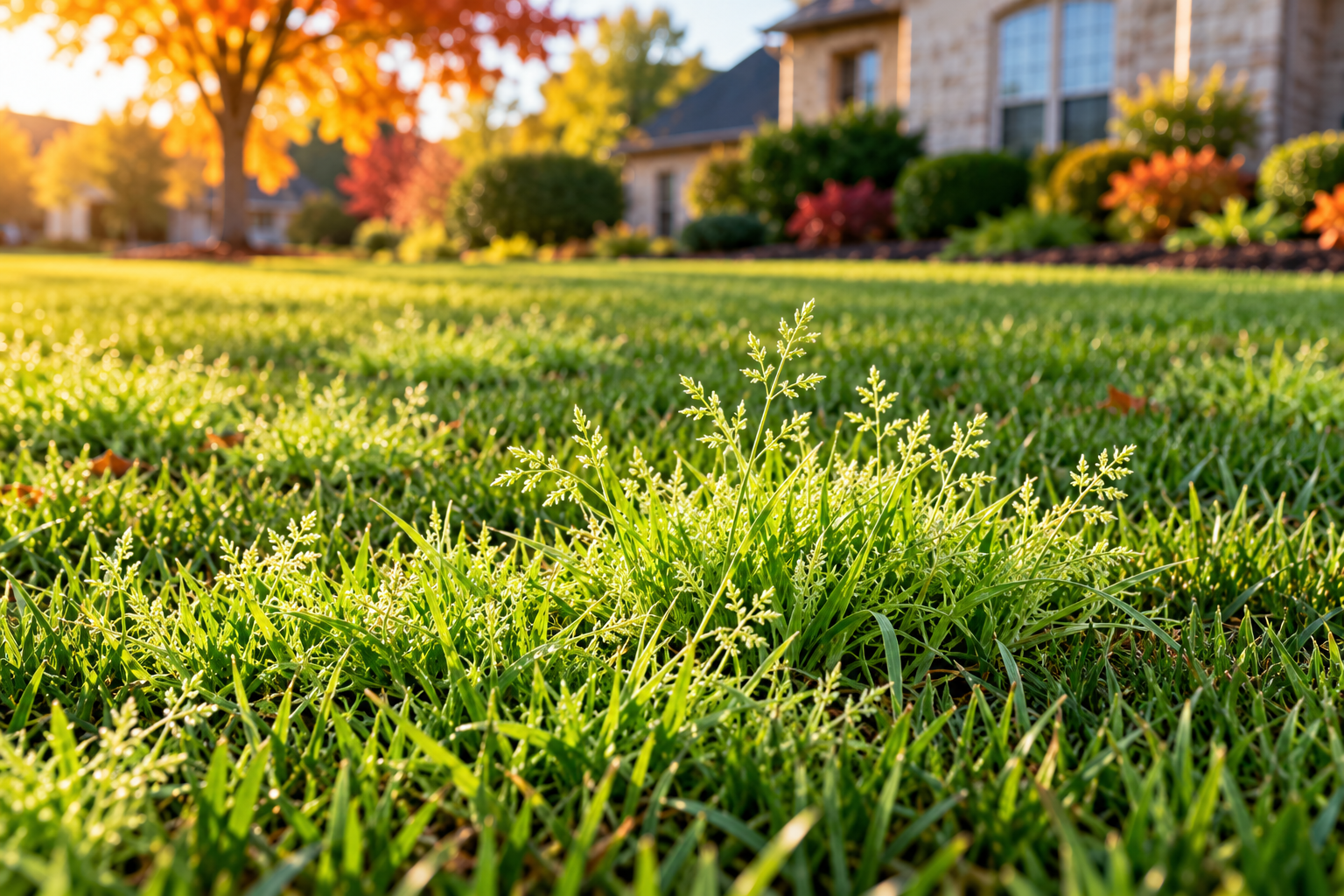
As fall arrives in North Texas, homeowners may notice new patches of bright green grass appearing throughout their lawns. While the extra greenery might seem harmless, it could be annual bluegrass, also known as Poa annua. This common winter weed can spread quickly, produce large amounts of seed, and become an eyesore in otherwise healthy lawns.
The good news is that you can take steps to prevent Poa annua before winter. The key is understanding when it germinates, applying pre-emergent weed control at the right time, and maintaining healthy turf throughout the fall.
What Is Poa Annua?
Poa annua is a cool-season annual grassy weed that typically germinates in late summer or early fall as soil temperatures begin to drop. It grows throughout the cooler months and often becomes especially noticeable in late winter and early spring.
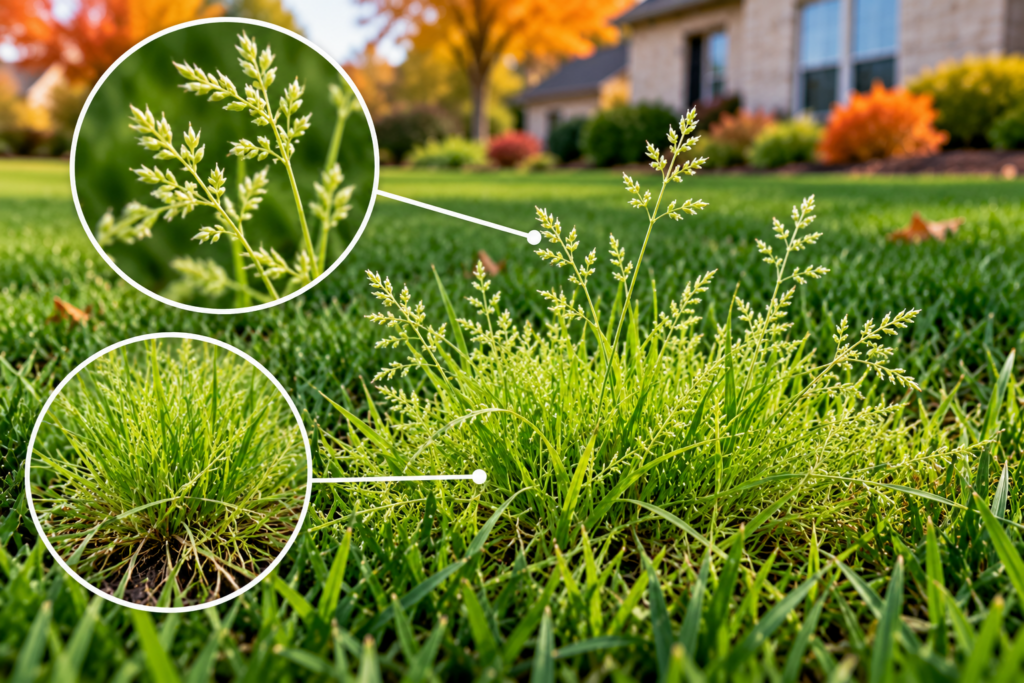
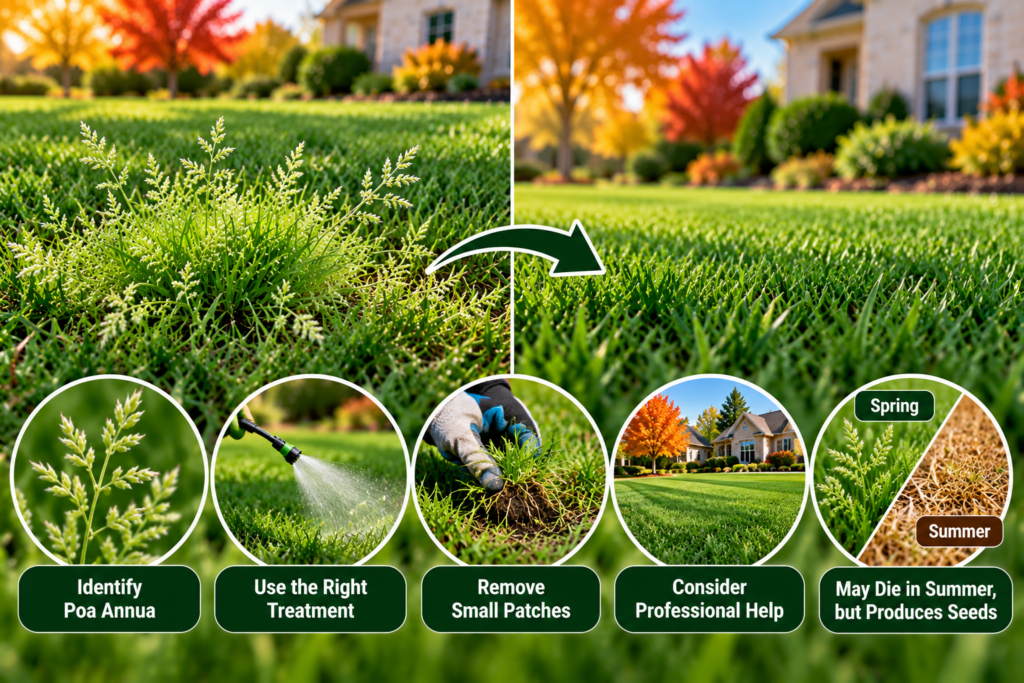
Annual bluegrass can be difficult to distinguish from desirable lawn grasses at first. However, it often grows in lighter green clumps and produces small, pale seed heads that stand out against surrounding turf.
Poa annua can germinate in North Texas as early as mid-September, making fall weed prevention especially important.
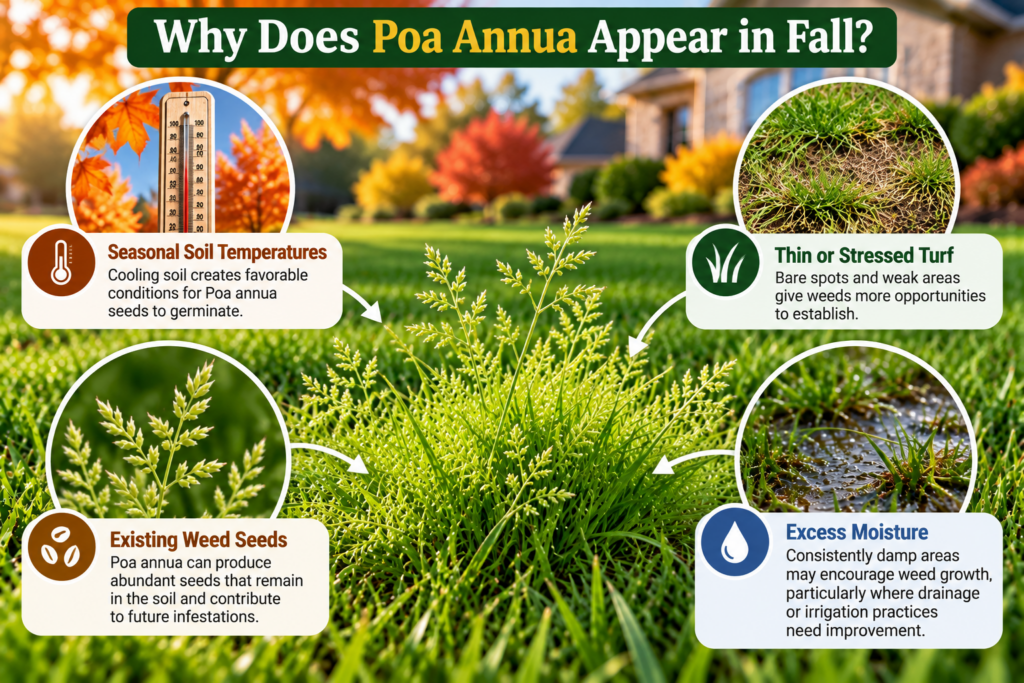
Why Does Poa Annua Appear in Fall?
Poa annua thrives when temperatures cool enough to support its germination and growth. While many warm-season grasses, including Bermuda grass, begin slowing down in fall, annual bluegrass can take advantage of the changing conditions.
Several factors may contribute to annual bluegrass problems:
- Seasonal soil temperatures: Cooling soil creates favorable conditions for Poa annua seeds to germinate.
- Thin or stressed turf: Bare spots and weak areas give weeds more opportunities to establish.
- Existing weed seeds: Annual bluegrass can produce abundant seeds that remain in the soil and contribute to future infestations.
- Excess moisture: Consistently damp areas may encourage weed growth, particularly where drainage or irrigation practices need improvement.
Identifying these conditions can help homeowners develop a more effective fall weed control plan.
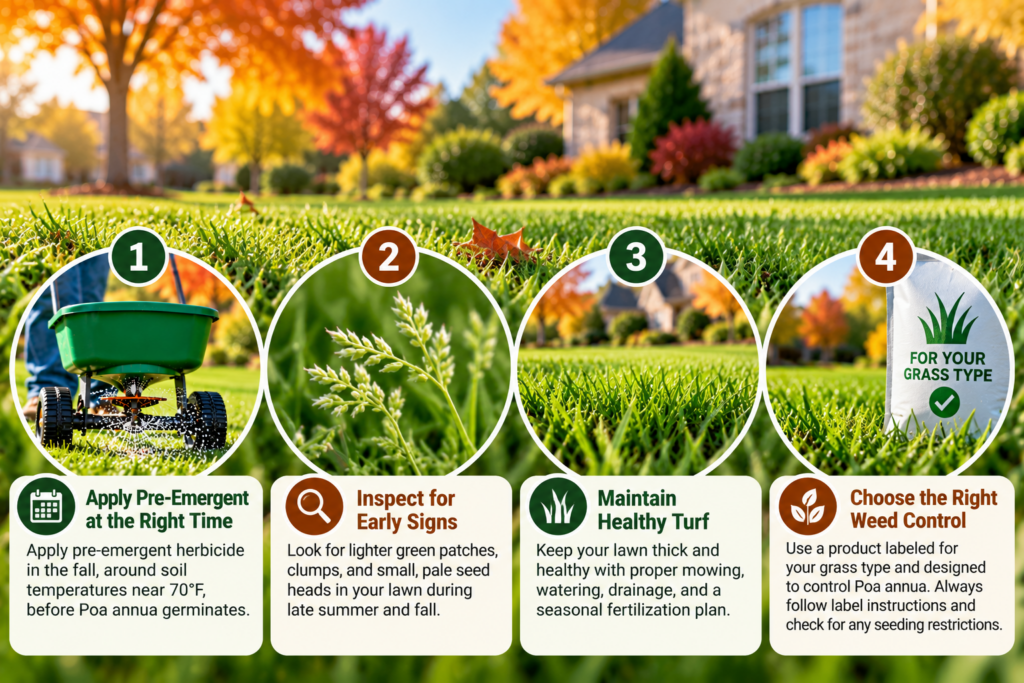
How to Prevent Poa Annua Before Winter
Preventing annual bluegrass starts before the weed becomes visible. Once Poa annua has germinated, a pre-emergent herbicide alone will not eliminate the existing plants.
1. Apply Pre-Emergent Weed Control at the Right Time
Pre-emergent herbicides help prevent susceptible weed seeds from successfully emerging. For North Texas homeowners, fall application timing is especially important because Poa annua can begin germinating in September.
We recommend timing fall pre-emergent applications around soil temperatures near 70°F for several consecutive days. Actual timing varies with weather, location, and the target weed.
JC’s Landscaping explains, “It’s very important to know as much as possible about your weed infestation before you use any herbicides. You’re going to have to pay close attention to the calendar and the weather.”
For more seasonal lawn care advice, read JC’s Landscaping’s full guide to Fall Weed Control for Frisco Lawns. The guide explains fall weed prevention, pre-emergent applications, and other ways to manage common lawn weeds.
The application must occur before the target weeds germinate, and the product must be appropriate for your grass type and intended use. Follow the label for application rates, watering requirements, and any restrictions.
2. Inspect Your Lawn for Early Signs of Annual Bluegrass
Regularly inspect your lawn during late summer and fall, especially if Poa annua has appeared in previous years.
Look for:
- Small patches of lighter green grass
- Clumps that grow differently from the surrounding turf
- Tiny, pale seed heads
- New growth in thin or bare areas
If you already see annual bluegrass growing, prevention alone may not be enough. A lawn care professional can help identify the weed and determine an appropriate treatment strategy.
3. Maintain Healthy Turf
A dense, healthy lawn can help limit opportunities for weeds to establish. Although good lawn maintenance cannot eliminate Poa annua seeds, it can support desirable grass growth and reduce the amount of exposed soil.
To maintain your lawn during fall:
- Mow at the recommended height for your grass type.
- Water according to your lawn’s needs and avoid keeping the soil unnecessarily wet.
- Address drainage problems and areas where grass struggles to grow.
- Follow a seasonal fertilization plan suited to your grass type and growth cycle.
Avoid applying excessive fertilizer in an attempt to make your lawn grow faster. Proper timing and nutrient levels are more important than applying more product.
4. Choose Weed Control That Matches Your Grass Type
Not every herbicide is safe for every lawn. A product that controls annual bluegrass in one turfgrass variety may injure another.
Before applying a weed control product, confirm that it is labeled for your grass type, targets Poa annua, and is appropriate for the weed’s current growth stage.
If you plan to overseed with ryegrass during fall, check product restrictions carefully. Some pre-emergent herbicides can interfere with the germination and establishment of desirable grass seed.
When Should You Treat Poa Annua in North Texas?
The most important factor is whether the weed has germinated. The following chart provides a general seasonal guide for North Texas homeowners.
| Time of year | Recommended approach |
|---|---|
| Late summer | Inspect the lawn and plan fall weed prevention. |
| Early fall | Apply an appropriate pre-emergent before Poa annua germinates. |
| Mid- to late fall | Monitor for emerging weeds; evaluate post-emergent options if necessary. |
| Winter | Continue monitoring established weeds and maintain the lawn appropriately. |
| Late winter to early spring | Address surviving plants before they produce more seed, when suitable treatments are available. |
These are general seasonal guidelines, not fixed application dates. Soil temperatures, rainfall, local weather, grass type, and product requirements all affect the appropriate timing..
What If Poa Annua Is Already Growing?
If annual bluegrass has already appeared, you still have options. The appropriate treatment depends on the type of grass in your lawn, how mature the weeds are, and the products available for your situation.
Post-emergent herbicides are designed to control existing weeds, but not all products work equally well against Poa annua. Some treatments may also discolor or damage desirable turf if applied incorrectly.
For small infestations, careful removal may be practical. For widespread growth, professional weed identification and treatment may help prevent further spread.
Keep in mind that annual bluegrass may die as temperatures rise in late spring or summer. However, plants can produce seeds before they die, creating another generation of weeds in the following cool season.
Get Help With Fall Weed Control
Preventing Poa annua before winter takes proper timing, consistent lawn maintenance, and the right weed control approach. By monitoring your lawn in early fall and addressing problems before annual bluegrass spreads, you can help protect your turf and reduce future weed pressure.
Frequently Asked Questions About Poa Annua
Can you prevent Poa annua before it grows?
Yes. An appropriately selected and timed pre-emergent herbicide can help prevent Poa annua seeds from emerging. It must be applied before germination, according to the product label.
When should I apply pre-emergent for Poa annua in North Texas?
Fall applications are generally made before annual bluegrass germinates, often around the period when soil temperatures begin dropping toward 70°F. In North Texas, germination can begin in September, so waiting until winter may be too late for effective prevention.
Does Poa annua die in the summer?
Poa annua is generally a winter annual in Texas and often dies as summer temperatures rise. However, it can produce seeds before dying, allowing new plants to emerge the following fall.
Can I get rid of Poa annua without killing Bermuda grass?
Potentially, yes. Certain treatments are labeled for annual bluegrass control in Bermuda grass, but product selection and timing matter. Always confirm turfgrass tolerance and follow the label to avoid damaging desirable grass.
Will mowing remove Poa annua?
Mowing can help maintain your lawn’s appearance, but it does not reliably eliminate annual bluegrass. Because Poa annua can produce seed at low mowing heights, mowing alone is not a dependable prevention strategy.
Is fall weed control necessary every year?
Annual weed pressure varies with weather, soil conditions, and previous infestations. However, lawns with a history of winter annual weeds may benefit from a consistent seasonal prevention plan. Properly timed fall pre-emergent applications can help reduce future weed problems.